Cat and Dog Teeth Cleaning in Glen Ellyn, IL for Advanced Dental Treatment
Dental disease can develop below the gumline long before a dog or cat shows obvious signs of discomfort. A dog may continue eating with a fractured tooth, while a cat with tooth resorption or periodontal disease may behave normally despite significant oral pain.
At Advanced Veterinary Dental Care and Oral Surgery in Glen Ellyn, IL, we provide cat and dog teeth cleaning services as part of advanced dental treatment for pets referred for specialty care. Our team works alongside your primary veterinarian to diagnose and treat complex dental conditions using advanced dental imaging, anesthesia monitoring, periodontal treatment, and veterinary oral surgery.

Specialty Dental Care That Supports Your Primary Veterinarian
Your primary veterinarian handles many aspects of your pet’s preventive and routine dental care. When an oral health problem requires advanced diagnostics, treatment, or surgery, they may recommend referral to a veterinary dental team.
We serve as an extension of your veterinarian’s care by focusing on complex dental and oral conditions. Following treatment, we communicate our findings and recommendations with your veterinarian so they can remain involved in your pet’s ongoing care.
When Is Specialty Cat or Dog Teeth Cleaning Recommended?
A specialty dental cleaning may be recommended when your pet has dental disease or another oral condition that requires more than a routine preventive cleaning.
Your dog or cat may be referred for advanced dental treatment for:
Fractured, worn, or damaged teeth
Loose teeth or advanced periodontal disease
Tooth root abnormalities
Oral pain or difficulty chewing
Facial swelling
Persistent bad breath associated with dental disease
Tooth resorption in cats
Retained baby teeth
Impacted or unerupted teeth
Dental or facial trauma
Conditions that may require tooth extraction or oral surgery
Because many dental problems extend beneath the gumline, a complete evaluation may reveal concerns that cannot be identified during an awake oral exam alone.
What Happens During an Advanced Pet Dental Cleaning?
Every dental treatment plan starts with your pet’s medical history, oral examination, imaging findings, and diagnosis. For pets referred to our Glen Ellyn dental team, teeth cleaning may be one part of a larger treatment plan.
Your pet’s care may include:
A complete oral examination under anesthesia
Full-mouth digital dental radiographs
Cone beam CT when additional imaging is indicated
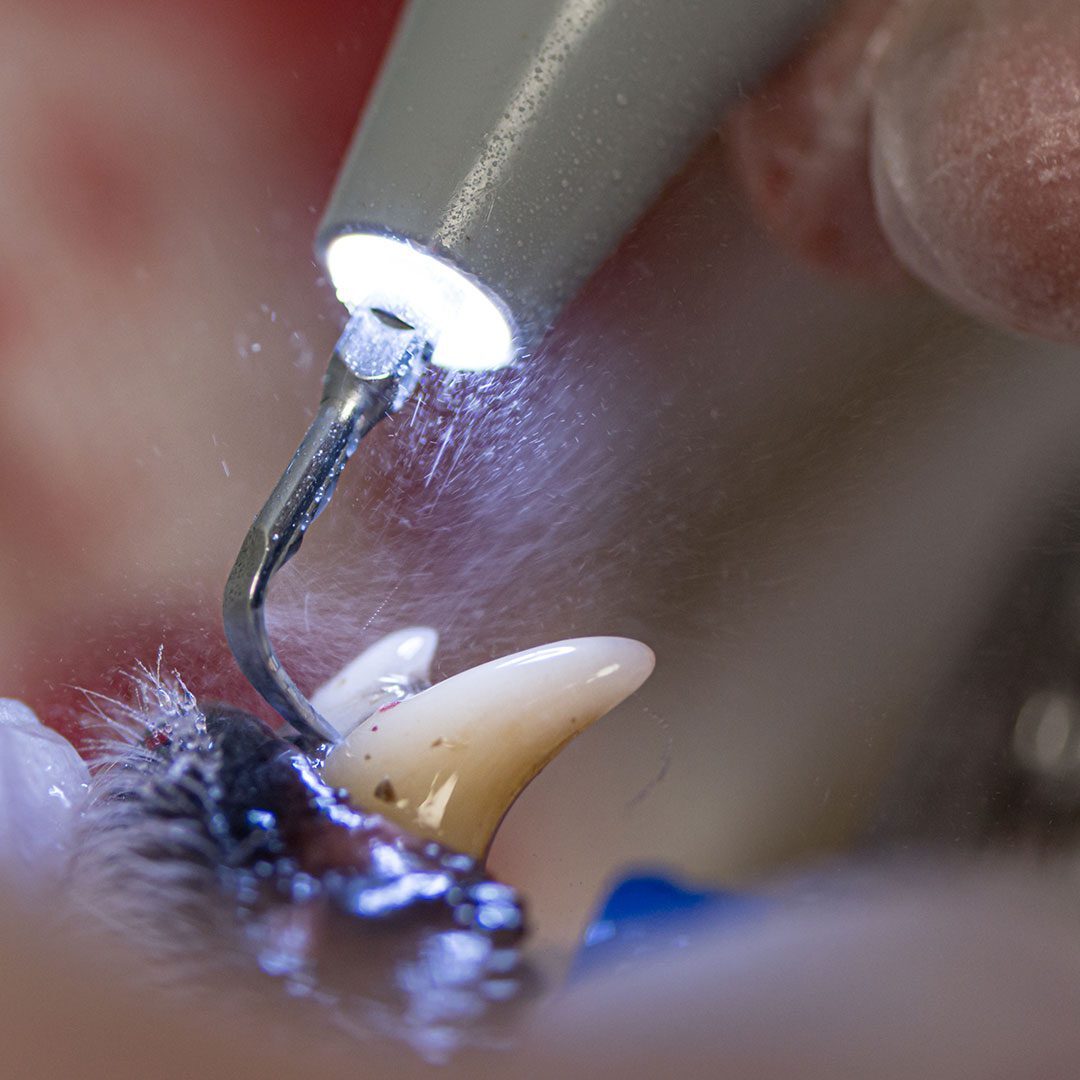
Scaling above and below the gumline
Polishing of the teeth
Evaluation of tooth roots, jawbone, and supporting tissues
Treatment of periodontal pockets or infection
Surgical tooth extractions when necessary
Root canal therapy or other tooth-preserving procedures when appropriate
Pain management and monitored recovery
A treatment report provided to your primary veterinarian
Why Are Dental X-Rays and Advanced Imaging Important?
Much of a tooth lies beneath the gumline, which means serious dental disease can remain hidden during a visual examination. A tooth may appear relatively normal above the gums while its root or surrounding bone has significant disease or damage.
Advanced dental imaging allows our team to evaluate these hidden structures. Digital dental radiographs and cone beam CT may help identify:
Tooth root infection
Bone loss
Tooth resorption
Root fractures
Impacted teeth
Abnormal tooth development
Jaw and facial abnormalities
Changes associated with periodontal disease
These findings help us determine which teeth can be treated and preserved and when extraction or another procedure may offer the best outcome.

A Multimodal Approach to Your Pet’s Oral Health
For pets with significant dental disease, trauma, or structural abnormalities, treatment often involves more than removing plaque and tartar.
At Advanced Veterinary Dental Care and Oral Surgery, a professional dental cleaning may be combined with:
Advanced periodontal treatment
Surgical tooth extractions
Root canal therapy
Restorative dentistry
Orthodontic treatment
Treatment of fractured or damaged teeth
Other veterinary oral surgery procedures
Our goal is to relieve oral pain, address active disease, preserve healthy teeth when appropriate, and restore comfortable oral function.
If your veterinarian has recommended specialty dental treatment, or if your pet has signs of a painful oral condition, our team is here to help.
Frequently Asked Questions About Cat and Dog Teeth Cleaning
Signs may include bad breath, difficulty chewing, dropping food, chewing on one side of the mouth, pawing at the face, facial swelling, decreased interest in hard food or treats, or visible tooth damage. Some pets show few outward signs even when significant dental disease is present.
Many pets come to us after their primary veterinarian identifies a dental condition that requires advanced treatment. If you are unsure whether your pet needs specialty dental care, contact our team to discuss the appropriate next step.
No. Brushing helps control plaque at home, while a professional dental cleaning removes plaque and tartar from above and below the gumline. A specialty dental procedure may also include dental imaging and treatment for existing disease or damaged teeth.
No. Treatment depends on the condition of each tooth and the surrounding tissues. When appropriate, procedures such as root canal therapy or restorative treatment may allow certain teeth to be preserved. Severely diseased or damaged teeth may need to be removed to eliminate pain and infection.
Recovery instructions depend on the treatment performed. We will explain pain management, feeding recommendations, activity restrictions, home care, and any follow-up your pet may need. We also communicate relevant findings and treatment information with your primary veterinarian.