
Cat and Dog Root Canals in Glen Ellyn, IL to Help Save Injured Teeth
A tooth injury does not always mean a tooth has to be removed. In some cases, a fractured or damaged tooth can be treated from the inside, allowing your pet to keep a functional tooth while the painful tissue is addressed.
That is where cat and dog root canals may help. At Advanced Veterinary Dental Care and Oral Surgery in Glen Ellyn, IL, we use advanced imaging, careful case selection, and specialty dental treatment to determine whether root canal therapy is a good option for your pet. When a tooth can be safely saved, this procedure may offer a less invasive and less painful path forward than extraction.
When Root Canals Can Help Pets
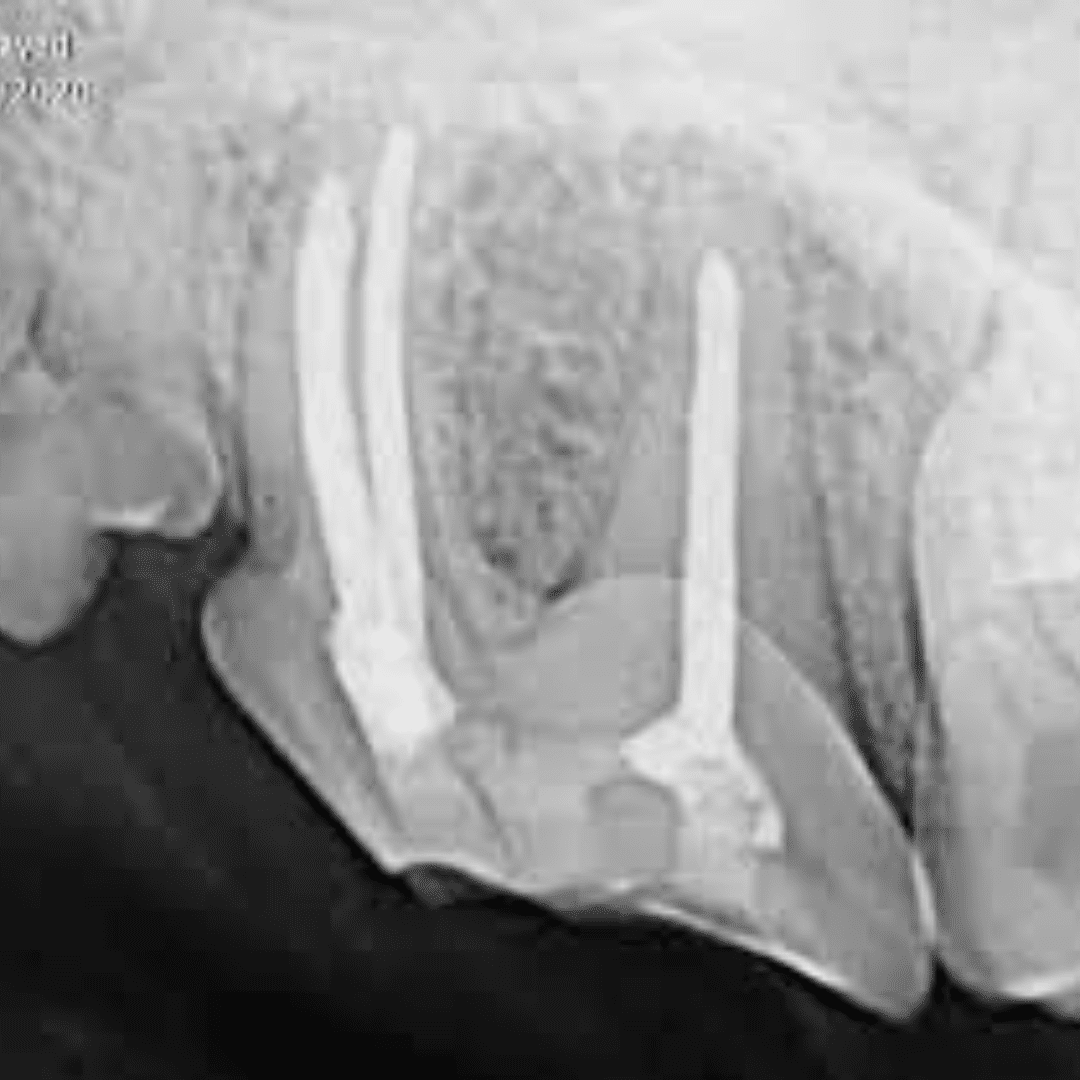
Root canal therapy may be recommended when a tooth is injured or damaged but still has enough healthy structure to be preserved. This treatment is most often considered for strategic teeth, such as large chewing teeth or canine teeth, when saving the tooth can benefit comfort and function.
A root canal may help pets with:
Traumatic tooth injuries
Fractured teeth with pulp exposure
Discolored teeth that may indicate internal damage
Worn teeth with pulp involvement
Teeth with inflammation or infection inside the tooth
Damaged teeth that are otherwise stable
Cases where extraction would be more invasive
Not every damaged tooth is a candidate for root canal therapy. Our team uses a full oral exam and dental imaging to evaluate the tooth, root, surrounding bone, and long-term prognosis before recommending treatment.
What Is a Root Canal?
A root canal is a dental procedure that treats disease or damage inside the tooth while allowing the tooth itself to remain in place. Instead of extracting the tooth, the damaged or infected pulp tissue inside the tooth is removed.
During root canal treatment, our team carefully cleans, shapes, disinfects, fills, and seals the canal inside the tooth. In many cases, advanced imaging helps us understand the length, shape, and number of canals so treatment can be planned with precision.
The goal is to:
Remove painful or infected tissue inside the tooth
Seal the tooth to help prevent future infection
Preserve the tooth’s structure when appropriate
Maintain comfortable chewing and oral function
Avoid extraction when the tooth can be safely saved

What to Expect After Your Pet Has a Root Canal
Most pets recover well after root canal therapy and can return to normal routines fairly quickly. Before your pet goes home, we will review the tooth treated, imaging findings, aftercare instructions, and any recommended next steps.
In some cases, we may recommend a crown or restoration to protect a weakened or high-use tooth from future damage.
Your pet’s aftercare may include:
Soft food or modified chewing for a short time
Avoiding hard toys, bones, antlers, or chews
Medication recommendations, if needed
Monitoring the treated tooth and gums
Follow-up exams or imaging
Long-term dental care guidance
We will also update your primary veterinarian so your pet’s care remains connected after treatment.
Helping Pets Keep Healthy, Functional Teeth
A damaged tooth does not always need to be removed. When a tooth can be saved, root canal therapy may give your pet a comfortable, functional outcome with less surgical trauma than extraction.
If your pet has a fractured, discolored, or painful tooth, our team can help you understand whether root canal treatment may be the right option.